The Crisis of Legacy Alloys
Beyond the Limits of Traditional Metallurgy
Useful Links
Beyond the Limits of Traditional Metallurgy
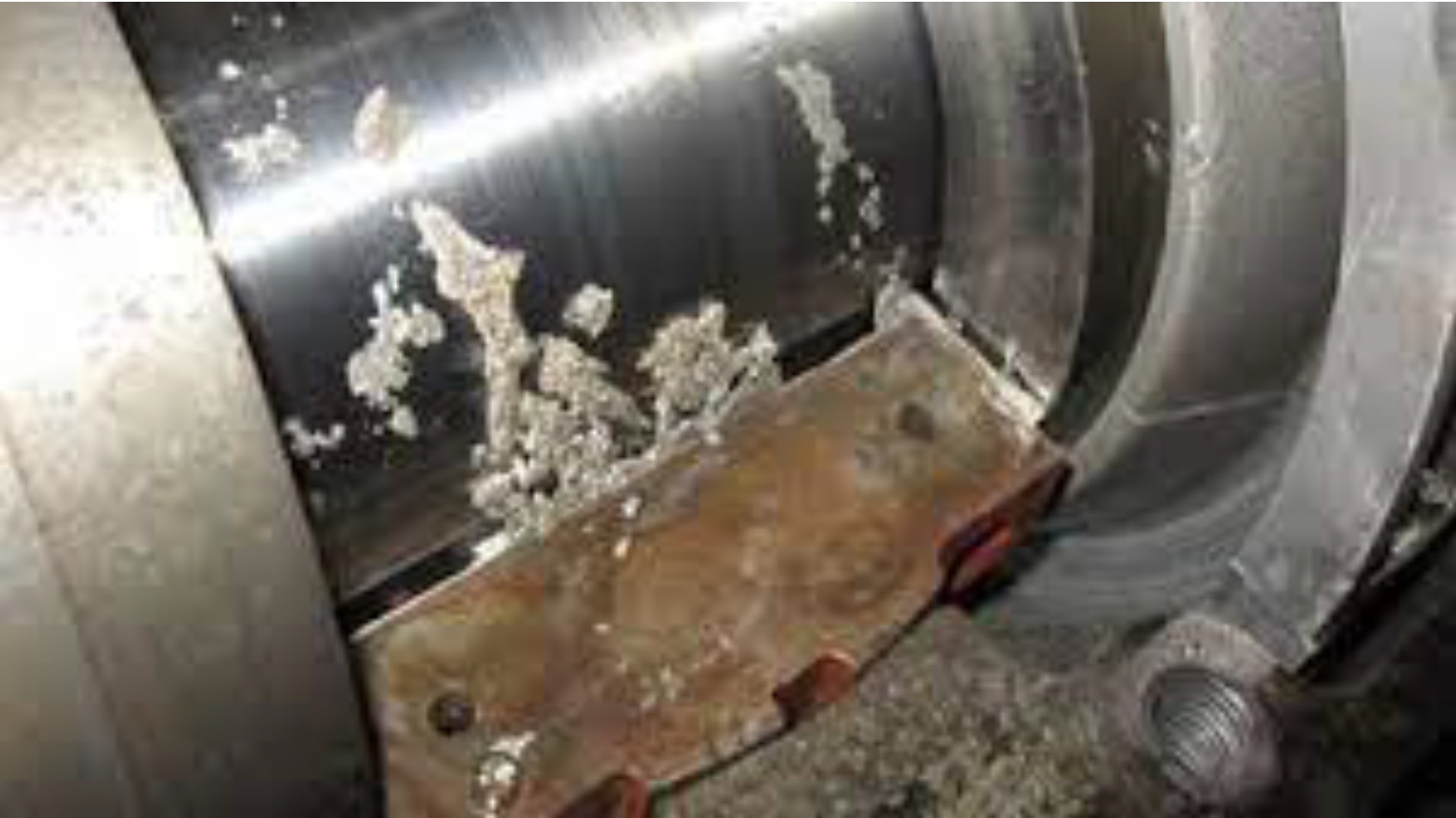
Traditional tin- and lead-based anti-friction alloys (Babbitts ASTM B23 and analogues) have been the industrial standard since 1839. Over nearly two centuries, their chemical composition has been optimized to its ultimate physical limit. However, the inherent flaws of Babbitt metal—rooted in its basic physical structure—remain unresolved. The primary constraint on Babbitt evolution is its physical nature: as heterogeneous alloys, their mechanical properties are strictly dictated by the crystal lattice of the base elements (tin, lead) and the distribution of hard inclusions (antimony, copper). Any disruption of this structure leads to property degradation. Classic damage analyses of Babbitt bearings conducted as early as 1950-70 (see Baudry R. A., Gunther D. W., Winer B. B., Trans. ASME., 1954, 76, 255–260; Bartz, W. J., Tribology International., 1976, 9(5), 213–224, etc) are still alarmingly relevant today (see Branagan L.A., Lubricants 2015, 3, 91-112, data of Waukesha Bearings, Osborne Engineering LLC, ISO 7146-1:2019, ISO 7146-2:2019, etc.). Despite incremental improvements, the fundamental physics of these alloys cannot keep pace with the demands of modern high-performance rotating equipment. (Table1) foto siemens
The Evolution Gap: Metallurgy vs. Smart Composites
Today, the potential for further modernization of legacy alloys in terms of unit pressure, thermal stability, and fatigue strength is completely exhausted. While traditional metallurgy has reached a developmental plateau, Polymer Composite Materials (PCM) are in a phase of rapid, exponential growth. They offer virtually unlimited possibilities for synthesizing new matrices and innovative fillers to meet the challenges of tomorrow.
Superior Damage Resilience
In stark contrast to their Babbitt-based counterparts, PCMs demonstrate superior performance across critical parameters of emergency damage resistance. While Babbitt alloys are prone to catastrophic failure under stress, PCM technology provides a robust safety margin, ensuring: Active Protection: The ability to maintain structural integrity where traditional metals would melt or seize. Operational Continuity: Turning potential system-wide failures into manageable service intervals. Table 2
Mechanical Constraints: Legacy Alloys vs. PCM
1. Thermal Degradation
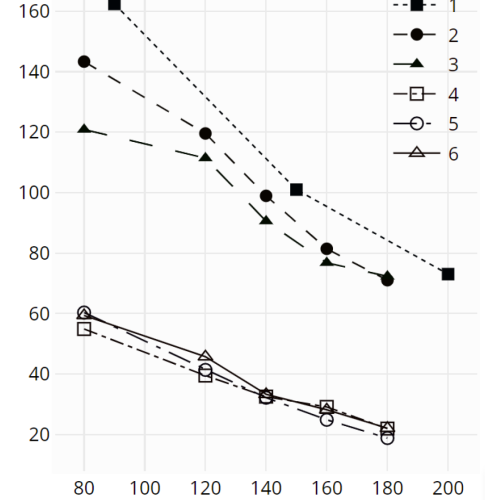
A critical flaw of traditional babbitts alloys is the sharp decline in mechanical properties upon heating. With a low melting point (~240°C), their load-carrying capacity drops significantly as operating temperatures reach 100–120°C. At 200°C, strength loss reaches 60–90%. Modern PCMs based on PEEK (polyetheretherketone) matrices reinforced with Carbon Fiber (CF) demonstrate remarkable stability across a wide temperature range.
PCM samples show a manifold superiority over legacy alloys in both compressive and tensile strength, particularly in the critical 120–180°C zone. Beyond 120°C, legacy alloys lose structural integrity and transition to a plastic state, whereas PCMs maintain high-performance indicators.
2. Microstructure and Fatigue
Babbitt consists of a soft matrix with hard inclusions. Cyclic loading and thermal stress cause phase redistribution, leading to spalling and fatigue failure of the crystal lattice. PCMs possess an amorphous or semi-crystalline fiber-reinforced structure, eliminating the stress concentration centers typical of metallic grain structures.
Tribological Superiority and Scuffing Prevention
The transition to PCM is driven by unique tribological properties unattainable for metallic friction pairs.
Resistance to Emergency Modes: The Babbitt-steel pair is prone to adhesive seizure (scuffing) if the oil film is breached. In „oil starvation“ modes, Babbitt melts and smears onto the steel shaft, causing catastrophic rotor damage and requiring expensive machining.